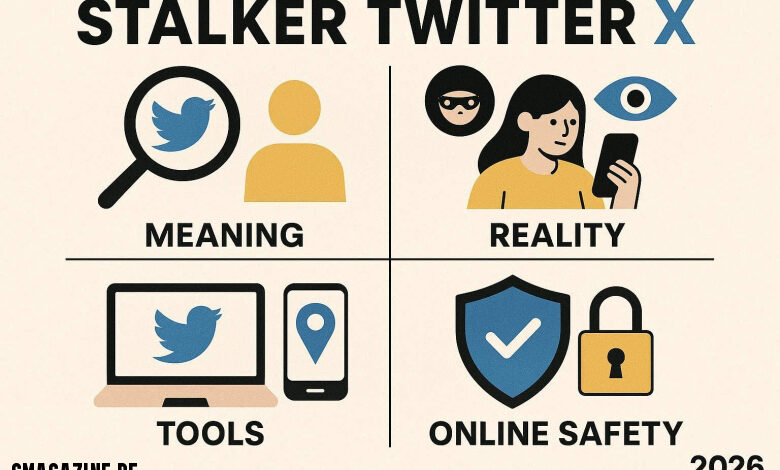
What “Stalker Twitter” Actually Means
The term “Stalker Twitter” usually refers to two different things:
- People who secretly observe or monitor others on X (formerly Twitter)
- Fake “stalker checker” websites or tools claiming to reveal profile viewers
In reality, online stalking means repeatedly checking or tracking someone’s activity without their consent, which can cross into cyberstalking behavior. However, most of what people call “stalking” on X is simply normal visibility of public content, not hidden surveillance.
A key fact: if an account is public, its posts are designed to be seen. That does not automatically mean stalking.
What You Can Actually See on X (Twitter)
On X, users can freely view a lot of public information without needing permission.
You can see:
- Public tweets and replies
- Likes and reposts
- Follower and following lists
- Media tabs (photos and videos)
- Public interactions with other accounts
If an account is not protected, everything they post is visible to anyone, even without logging in. This is how the platform is designed—open social sharing by default.
However, this visibility sometimes makes users feel like they are being watched, even when no one is actively “stalking” them.
What You CANNOT See on X (Important Privacy Limits)
Despite what many people believe, X does NOT provide certain information:
- You cannot see who visited your profile
- You cannot track anonymous viewers
- You cannot see who blocked you
- You cannot see silent profile lurkers
- There is no official “story views” feature like Instagram
A very important point: any website or app claiming to show “who viewed your Twitter profile” is fake or misleading. X does not release this data through its API.
This is one of the biggest misconceptions behind the idea of “Stalker Twitter.”
Common “Stalking” Tricks and Advanced Search Methods
While true profile tracking is not possible, users can still explore public data using built-in features.
Some examples include:
1. Advanced Search Operators
Users can filter content using search commands like:
- from:username → shows all posts from a user
- since:2025-01-01 → filters posts by date
- filter:images → shows only images
These tools are public and legal, but they can feel intrusive when used heavily.
2. Lists Feature
Users can add accounts to private lists to quietly follow updates without following them directly.
3. Analytics & Tools
Platforms like TweetDeck-style dashboards or analytics tools show:
- Engagement stats
- Follower growth
- Post performance
However, they still do NOT reveal private viewers or “stalkers.”
Fake “Twitter Stalker Tools” and Scams
Many websites like “twstalker” or “profile viewer trackers” claim they can show who is stalking your account.
These are completely fake because:
- X does not share viewer data
- No third-party tool has access to profile visits
- Most require login credentials
Warning: These sites are often phishing scams designed to steal your password or hack accounts.
If a tool asks for your X login, it is unsafe.
Legal and Privacy Aspects of Online Stalking
In many countries, including Germany and others, stalking is a criminal offense when it involves repeated harassment or unwanted contact. Online harassment also falls under cybercrime laws.
On X, harmful behavior may include:
- Repeated unwanted messages
- Threats or harassment
- Persistent fake accounts
- Obsessive monitoring combined with contact attempts
If this happens, users can:
- Block accounts immediately
- Report abusive behavior
- Switch to private account mode
- Keep screenshots as evidence
- Contact authorities in serious cases
How to Protect Yourself from “Stalker Twitter” Behavior
To stay safe on X in 2026, use these steps:
- Turn your account private if needed
- Limit who can reply or message you
- Avoid suspicious third-party apps
- Regularly review followers
- Use block and mute tools
- Enable stronger account security (2FA)
Most importantly, remember: visibility does not equal stalking. Public content is meant to be seen—but your safety and privacy choices still matter.
Final Thoughts
The idea of “Stalker Twitter” is often exaggerated online. While real cyberstalking does exist and should be taken seriously, most fears come from misunderstandings about how X (Twitter) visibility works.
The platform does not show profile viewers, and no external tool can accurately reveal them. Staying informed about privacy limits and using safety tools is the best way to protect yourself online.