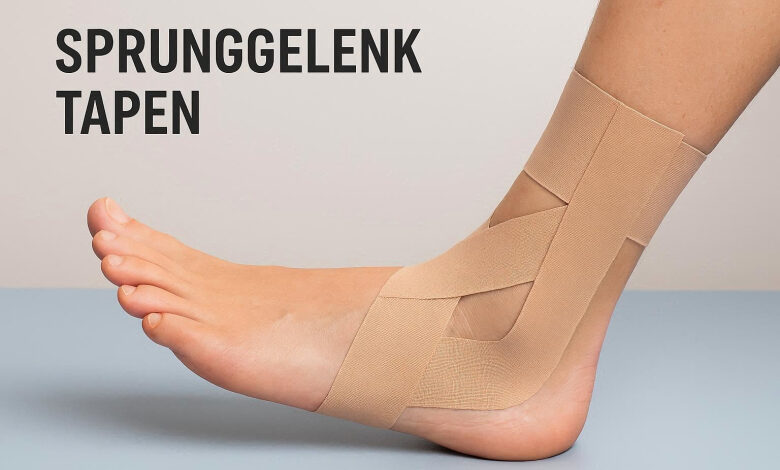
Sprunggelenk tapen means supporting the ankle joint with kinesiology tape or rigid sports tape to improve stability, reduce pain, and help prevent rolling the ankle. It is widely used in football, basketball, running, trail sports, volleyball, and rehab after ankle sprains. In 2026, ankle taping remains one of the most searched injury-prevention methods because it is affordable, fast, and effective when used correctly.
If you’ve twisted your ankle, feel instability, or want extra support during sport, this guide explains exactly how to tape it properly.
What Is Sprunggelenk Tapen and Why Use It?
The Sprunggelenk is the ankle joint, one of the most stressed joints in the body. It absorbs force when walking, jumping, turning, or landing. Because of that, ankle sprains are extremely common.
Taping the ankle can help with:
- Stability – supports inner and outer ligaments after rolling the ankle
- Pain relief – reduces strain on injured tissues
- Swelling control – helps lymphatic drainage with kinesio tape
- Proprioception – improves body awareness and balance
- Prevention – useful in sports with fast direction changes
Important: Tape supports recovery, but it does not replace proper healing. If you have severe swelling, bruising, or cannot bear weight, seek medical evaluation first.
What You Need Before Taping
To tape your ankle properly in 2026, gather the right supplies first.
Best Tape Options
| Tape Type | Best For | Flexibility |
|---|---|---|
| Kinesiology Tape | Light support, movement, swelling | High |
| Rigid Sports Tape | Maximum stability, competition | Low |
| Leukotape | Strong long-lasting support | Very Low |
Other Helpful Items
- Scissors
- Pre-wrap / foam underlayer
- Clean towel
- Hair trimmer (better adhesion)
- Skin-safe adhesive spray (optional)
Tip: Tape sticks best to clean, dry, shaved skin and lasts 3–5 days with kinesio tape.
How to Tape the Ankle with Kinesiology Tape
This is the most popular method for mild sprains and sports support.
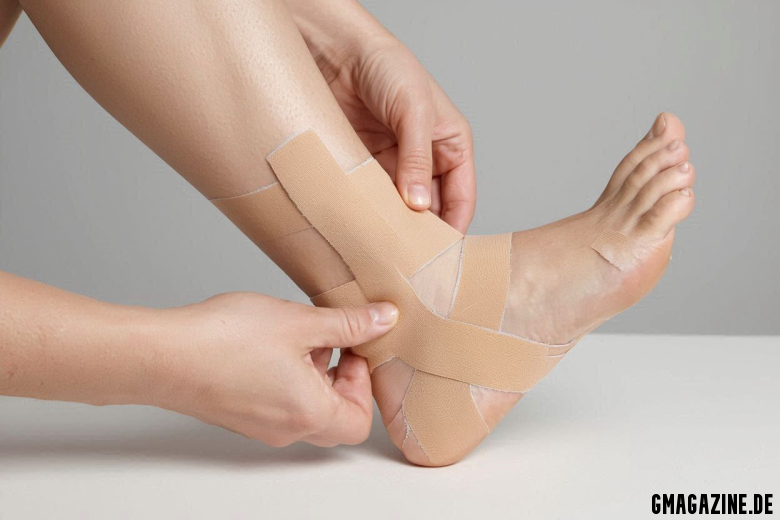
Step 1: Anchor Strip
Sit down and place your foot at 90 degrees (neutral position).
Apply one strip around the lower shin about 10 cm above the ankle with no stretch.
Step 2: Outer Ligament Support
Cut two long strips.
- Start from the inside ankle bone
- Pull under the heel
- Cross upward over the outer ankle
- Finish on the shin
Use 50–75% stretch in the middle only. Ends stay tension-free.
Step 3: Heel Lock
Apply another strip starting at the Achilles area, wrapping under the heel and over the foot.
This improves heel control and side stability.
Step 4: Rub to Activate Glue
Rub the tape firmly for 10 seconds. Heat activates adhesive.
Result: You can still move up/down, but sideways ankle rolling is reduced.
Rigid Sports Tape Method for Maximum Stability
If you need strong support for competition or the first days after injury, rigid tape is often preferred.
How It Works
- Apply pre-wrap
- Add top and bottom anchors
- Place 3 stirrups from inside leg → under foot → outside leg
- Add figure-8 wraps around foot and ankle
- Add heel locks
- Finish with closure strips
Important Warning
Rigid tape reduces mobility. Wear it for 2–3 hours max, then remove.
Do not sleep with rigid sports tape on.
Common Mistakes When Taping
Many people tape incorrectly and lose the benefit.
| Mistake | Problem | Correct Fix |
|---|---|---|
| Too much stretch | Numbness, blue foot | Use moderate tension |
| Foot not at 90° | Wrinkles, poor fit | Keep neutral foot angle |
| Applied over sweat | Falls off quickly | Dry skin first |
| Used over swelling | Tape becomes tight | Ice/elevate first |
| Wearing too long | Skin irritation | Replace after 3–5 days |
If toes become cold, numb, or discolored — remove tape immediately.
When NOT to Tape the Ankle
Taping is useful, but not always appropriate.
Avoid taping if you have:
- Open wounds
- Skin infection / eczema
- Tape adhesive allergy
- Severe swelling
- Suspected fracture
- Blood clot history
- Serious circulation problems
- Uncontrolled diabetes (ask doctor first)
If you heard a pop, cannot walk, or swelling appears quickly, get medical help.
Tape vs Bandage vs Orthosis (2026 Comparison)
| Option | Stability | Comfort | Best Use |
|—|—|—|
| Tape | Medium | Good | Sports / mild instability |
| Bandage | Light | Excellent | Everyday support |
| Orthosis / Aircast | High | Moderate | Acute injury / post-op |
Pro Tip: Combine tape with balance board training 5 minutes daily. That strengthens stabilizer muscles so you eventually need less support.
Best 2026 Uses for Sprunggelenk Tapen
Athletes still rely on ankle taping in 2026 for:
- Football matches
- Basketball games
- Trail running
- Tennis
- Volleyball
- Gymnastics
- Returning after ligament strain
Many physiotherapists now combine taping + mobility drills + calf strengthening for faster return to sport.
Conclusion
Sprunggelenk tapen is one of the easiest and smartest ways to support the ankle in 2026. Whether you choose kinesio tape for flexible support or rigid tape for maximum protection, proper technique matters. Tape can improve stability, reduce pain, and help prevent re-injury—but it works best when paired with rehab exercises and smart recovery.
If the ankle is seriously swollen, bruised, or unstable, skip DIY treatment and get it checked professionally. A well-taped ankle helps—but a properly healed ankle performs even better.